
[Query:
Please provide information on the Chushi Gangdruk in Tibet.
Response:
There is no information on current activities in Tibet of Chushi Gangdruk [also spelled
Gangdrug] in sources currently available to the RIC. Chushi Gangdruk does have a New
York chapter whose web-site is www.chushigangdruk.org. This web-site contains detailed
information on the group’s founding and history in Tibet, and states that there are also Chushi Gangdruk chapters in Canada, Bhutan, Japan, Nepal, and Taiwan
(chushigangdruk.org undated).
According to Freedom House:
“Prior to the Chinese invasion in 1949, Tibet had been a sovereign state for the better part
of 2,000 years, coming under modest foreign influence only during brief periods in the
thirteenth and eighteenth centuries. China invaded Tibet with 100,000 troops in late 1949
and in 1951 formally annexed the country” (FH 1999).
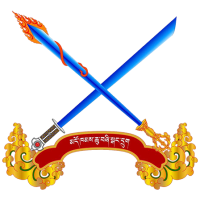
The Chushi Gangdruk Defend Tibet Volunteer Force was formally established on June 16,
1958, to resist Chinese occupation of Tibet (chushigangdruk.org undated). The words
Response to
Information
Request Number:
CHN03002.NYC
Date: January 22, 2003
Subject: Tibet [China]: Information on Chushi Gangdruk [Gangdrug]
From: INS Resource Information Center
Keywords: Tibet [China] / Armed resistance movements / Minorities / Political violence
8/15/05
RIC Query – Tibet [China] (22 January 2003) Page 2 of 3
http://uscis.gov/graphics/services/asylum/ric/documentation/CHN03002.htm
Chushi Gangdruk [Gangdrug] translate as “Land of Four Rivers and Six Ranges,” which
describes Kham, the southeast area of Tibet where many Chushi Gangdruk members are
from (Associate Professor of Tibetan Studies 15 Jan 2003).
Chushi Gangdruk was active as a CIA-trained and -backed armed resistance group in
Tibet in the 1950s and 1960s (Associate Professor of Tibetan Studies 15 Jan 2003). For
the Dalai Lama’s flight from Tibet to India during the 1959 Tibetan insurrection against
Chinese occupation, Chushi Gangdruk fighters were deployed from Lhasa in Tibet across
the Himalayas into India in order to block Chinese pursuit of the Tibetan leader (Roberts
1997). Chushi Gangdruk operated out of Nepal for a time after being driven out of Tibet by
the Chinese (Representative ICT 16 Jan 2003) but by 1970 the group was no longer a
fighting force (U.S. DOS 16 Jan 2003).
Most of the surviving original Chushi Gangdruk members were arrested by the Chinese or
fled to India where the needs of the former guerillas and their family members are met
today by the India-based Chushi Gangdruk Welfare Society (Associate Professor of
Tibetan Studies 15 Jan 2003; Representative ICT 16 Jan 2003). The Chushi Gangdruk in
India also represents the interests of the Khampas [people from the Kham region in Tibet],
but in the group’s charter and in their current activities there is no call to violent struggle
against Chinese rule in Tibet (Representative ICT 16 Jan 2003).
Apart from caring for gentrifying survivors of the original guerilla movement and “keeping
the flame of resistance [to Chinese rule of Tibet] alive” in exile (Associate Professor of
Tibetan Studies 15 Jan 2003), Chushi Gangdruk is no longer an active, much less armed,
resistance movement in Tibet (Associate Professor of Tibetan Studies 15 Jan 2003;
Representative ICT 16 Jan 2003; U.S. DOS 16 Jan 2003; Representative TIN 16 Jan
2003). Those who join the modern organization Chushi Gangdruk as it is constituted
among Tibetan exiles seem to be descendants of original members or from Kham in Tibet
(Associate Professor of Tibetan Studies 15 Jan 2003).
Several Tibet experts consulted by the RIC went further to state that there are indeed no
organized armed freedom fighters currently in Tibet (Associate Professor of Tibetan
Studies 15 Jan 2003; Representative ICT 16 Jan 2003; U.S. DOS 16 Jan 2003). There
have been about a dozen bombings in Tibet in the past decade, but the bombs are usually
placed in such a way that the risks for loss of life are minimized. For example, a bomb may
go off in front of a police station in the middle of the night. There have also been antiChinese rule demonstrations involving destruction of property and stone-throwing at police.
However, no organized resistance group has ever claimed responsibility for these
incidents (Representative ICT 16 Jan 2003).
For further information on the history of Chushi Gangdruk, please see the attachments.
This response was prepared after researching publicly accessible information currently
8/15/05
RIC Query – Tibet [China] (22 January 2003) Page 3 of 3
http://uscis.gov/graphics/services/asylum/ric/documentation/CHN03002.htm
Last Modified 05/05/2003
available to the RIC within time constraints. This response is not, and does not purport to
be, conclusive as to the merit of any particular claim to refugee status or asylum.
References:
Associate Professor of Tibetan Studies, Indiana University. Email to the INS Resource
Information Center (15 Jan 2003).
Freedom House (FH). FREEDOM IN THE WORLD 1998-1999. “China: Tibet” (1999)
(http://freedomhouse.org/survey99/relterr/tibet.html)
Political Officer, China Desk, U.S. Department of State (USDOS). Telephone interview (16
Jan 2003).
Representative, International Campaign for Tibet (ICT). Telephone interview (16 Jan
2003).
Representative, Tibet Information Network (TIN). Email to the INS Resource Information
Center (16 Jan 2003).
Roberts, John R. THE AMERICAN SPECTATOR, “The Secret War Over Tibet: A Story of
Cold War Heroism — and Kennedy Administration Cowardice and Betrayal” (Dec 1997) –
NEXIS.
Attachments:
Roberts, John R. THE AMERICAN SPECTATOR, “The Secret War Over Tibet: A Story of
Cold War Heroism — and Kennedy Administration Cowardice and Betrayal” (Dec 1997) –
NEXIS.
Swenson, Karen. THE NEW LEADER, “Orphans of the Cold War: America and the
Tibetan Struggle for Survival” (9 Aug 1999) – NEXIS.