By justin Kiersky
“When men become desperate, they consult the gods. When the gods become desperate, they tell lies.” The words of a lama, spoken to the Dalai Lama after an unfavorable divination ceremony, echoed the growing uncertainty in Tibet as Chinese forces tightened their grip.
Whether by oracles or rocket-propelled grenades, fate was sealed on the night of March 17, 1959, when two mortar shells crashed into the marsh near Norbulingka, the Dalai Lama’s Summer Palace in Lhasa. For weeks, venerated lamas and members of the Kashag (parliament) had debated whether the 14th Dalai Lama, Tenzin Gyatso, should continue negotiating with the increasingly impatient and emboldened Chinese – or flee. Divination rituals foretold that he should remain in Lhasa rather than flee to India. But the 23-year-old “Wish-Fulfilling Gem” also feared that the tens of thousands of Tibetans who had formed a human shield around his residence would be massacred by the 30,000 People’s Liberation Army (PLA) troops if they perceived his life – or his divinity – to be under threat.
Around 10 p.m. the following night, disguised as a Kham soldier and carrying a rifle, the Dalai Lama stepped out of Norbulingka’s south gate. At his side were his Guards Commander P.T. Takla, and the mastermind of the operation, Lord Chamberlain Thubten Woedhen Phala. Moving swiftly, they slipped through Lhasa’s back alleys to the Ramagang ferry, where they quietly crossed the Kyichu River on yak-hide coracles – heading toward exile and an uncertain future.
For the next four days, he and his entourage – 70 family members, Kashag ministers and loyal soldiers – traversed treacherous mountain passes, skirted enemy territory and crossed the Brahmaputra River during a sandstorm. Their journey ultimately led them to Riwo Dechen Monastery in the Valley of the Kings.
Waiting a hundred miles south of Lhasa were two extraordinary men: Athar and Lhotse, wearing the white and yellow armbands of the Chushi Gangdruk volunteer army. The Tibetan freedom fighters had been secretly airdropped into Tibet the previous year by the U.S. Central Intelligence Agency (CIA). Using a hand-cranked radio transmitter, they provided updates on the Dalai Lama’s journey to their CIA handlers and a select group of U.S. officials – including President Dwight D. Eisenhower himself.
At the heart of this covert operation was a place thousands of miles away from Tibet – Camp Hale, Colorado. Nestled in the Rocky Mountains north of Leadville, Camp Hale had originally been established during World War II as the training ground for the 10th Mountain Division, an elite unit specializing in alpine warfare. Its rugged terrain and high-altitude conditions made it the ideal location for training Tibetan guerrillas in the art of resistance warfare.
Here, under the watchful eye of CIA trainers and military experts, a select group of Tibetan recruits underwent grueling training in guerrilla tactics, sabotage and survival. The skills they acquired at Camp Hale would soon be tested in the unforgiving mountains of their homeland, where they would fight not just for Tibet’s freedom but for their very survival.
The idea of training Tibetan freedom fighters took root in 1956 when the Dalai Lama’s brothers, Gyalo Thondup and Takster Rinpoche, met with CIA operatives in Calcutta, India. U.S. authorities were initially hesitant to support Tibet’s struggle, fearing direct intervention would escalate the Cold War. But as reports of brutal Chinese repression in Tibet surfaced, attitudes shifted. The CIA saw an opportunity to harass the Chinese with minimal investment while furthering their broader goal of curbing communist expansion.
A bold plan was devised. Six Tibetan recruits would be flown from India to a CIA base on the Pacific island of Saipan, where they would undergo intensive training in guerrilla warfare, intelligence gathering and radio communications. Once trained, they would be airdropped back into Tibet to organize resistance movements and relay intelligence. The program, known as ST CIRCUS, was born.
The recruits were handpicked by Andrugtsang Gonpo Tashi, a wealthy Kham merchant who later led the Chushi Gangdruk resistance. Having witnessed PLA atrocities, they were deeply motivated. Among them were Athar and Lhotse, key figures in the Dalai Lama’s escape.
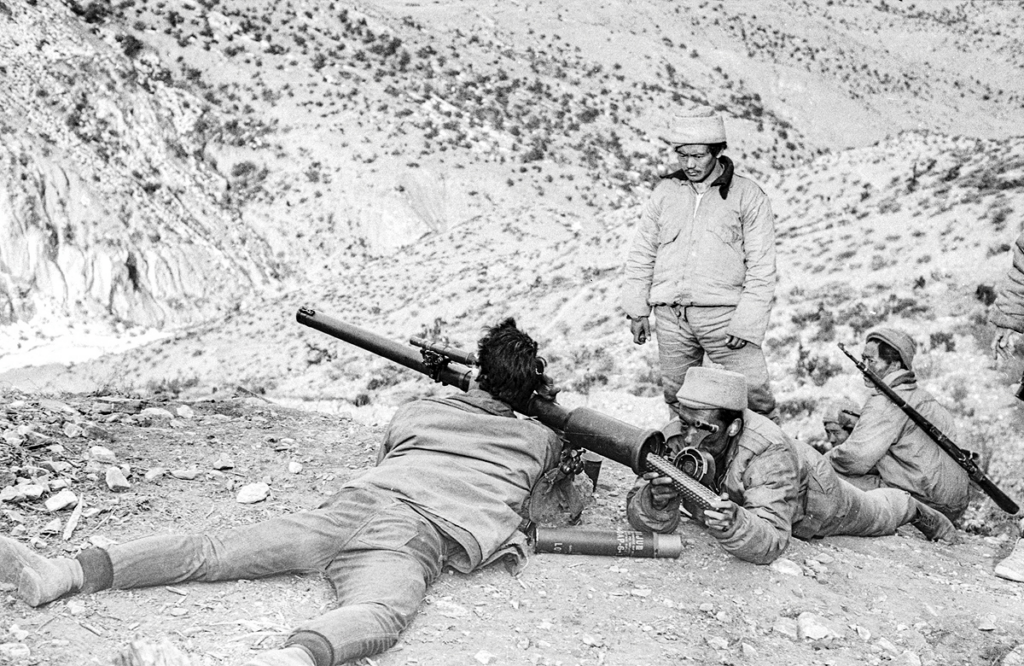
Over four and a half months on Saipan, the Tibetans underwent intensive training in guerrilla warfare, map reading and clandestine radio communications. To maintain plausible deniability, the CIA assigned the recruits American names, including Tom (Athar), Lou (Lhotse) and Walt (Wangdü).
In October 1957, Tibet Task Force Teams One and Two boarded a B-17 bomber at Kurmitola airstrip in East Pakistan (now Bangladesh) and were flown by Polish aircrew into eastern Tibet. At 11 p.m., as Team One passed over the Brahmaputra River, they saw the green jump light flash. One by one, they leapt into the darkness toward the Kham region and their dream of Tibetan liberation. A second team had to wait weeks for favorable conditions.
The first airdrops were disastrous. Arms shipments never arrived, covers were blown and several trainees were killed. After a grueling 500-mile trek, Team Two leader Wangdü Gyatotsang arrived in Lhasa furious – his platoon was decimated, his organizing efforts squandered and not a single weapon had been provided to the famed Khampa resistance fighters who had come to help. He blamed the Americans.
Despite setbacks, the CIA saw long-term potential in Tibetan resistance. With backing from the State and Defense departments, as well as Eisenhower’s psychological strategy group, the ST CIRCUS program was approved with increased funding, ensuring future Tibetan operations.
In early 1958, Lhamo Tsering, later dubbed the “Tibetan George Smiley,” led a group of Tibetans to the U.S. for CIA training. Since the CIA training facilities were still under construction, some recruits were sent to an undisclosed Virginia facility – later revealed as The Farm (Camp Peary). By summer, the new training site was ready, and the Tibetans were relocated to Camp Hale, the historic base of the U.S. Army’s 10th Mountain Division.
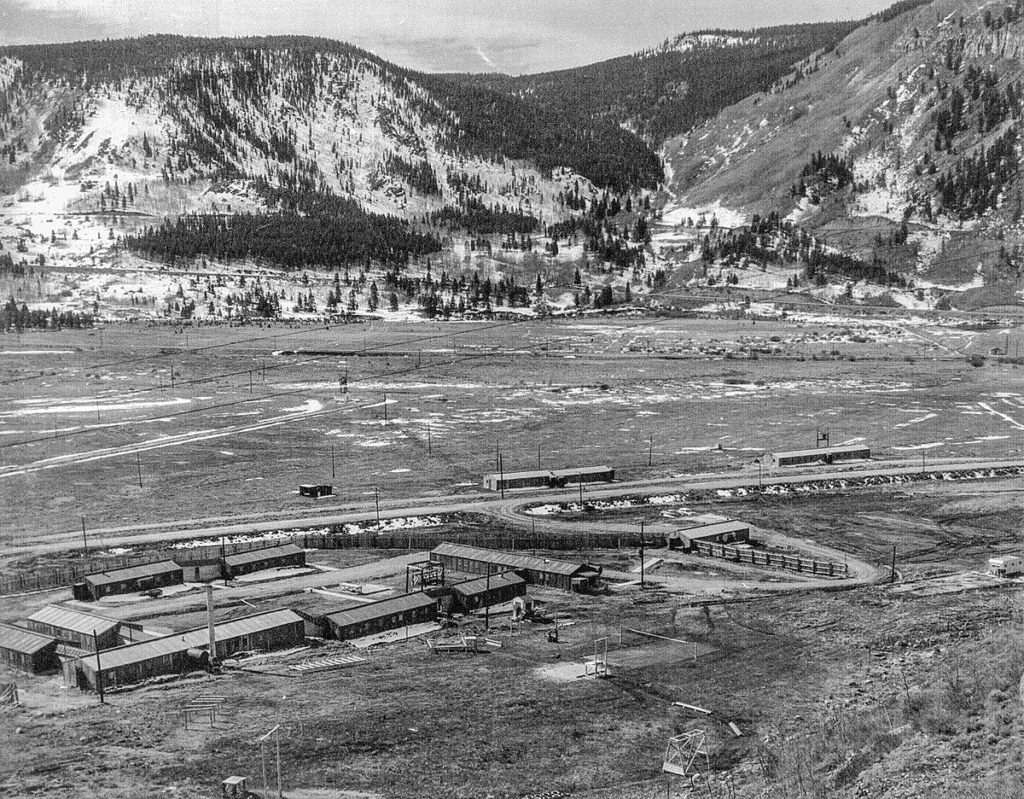
The base was located north of Leadville, Colorado, in a secluded corner of the Pando Valley, visible today from Highway 24. The CIA training facilities on base featured a mess hall, recreation hall, barracks, classrooms and latrines, all enclosed by an unassuming wooden fence – designed as much to deter the occasional hiker or miner as to maintain an air of insignificance. CIA trainers called it The Ranch, but to the Tibetans, the mountains of Colorado reminded them of home – they called it Dumra (The Garden), and the name stuck.
One of the trainees, Bhusang – a former doctor from Lhasa whose life would later be spared by the butt of a Chinese rifle after a tragic battle in Markham – recalled the landscape vividly:
“The camp was located at the foot of a low mountain. A broad valley with a river flowing through it lay before us. The mountains were beautiful, with forests and open areas in the distance, where people would ski in winter. We could see tiny figures of skiers gliding down the slopes. A railway line ran along the far side of the valley, and every evening, we would hear the lonely whistle of the freight train in the distance.”
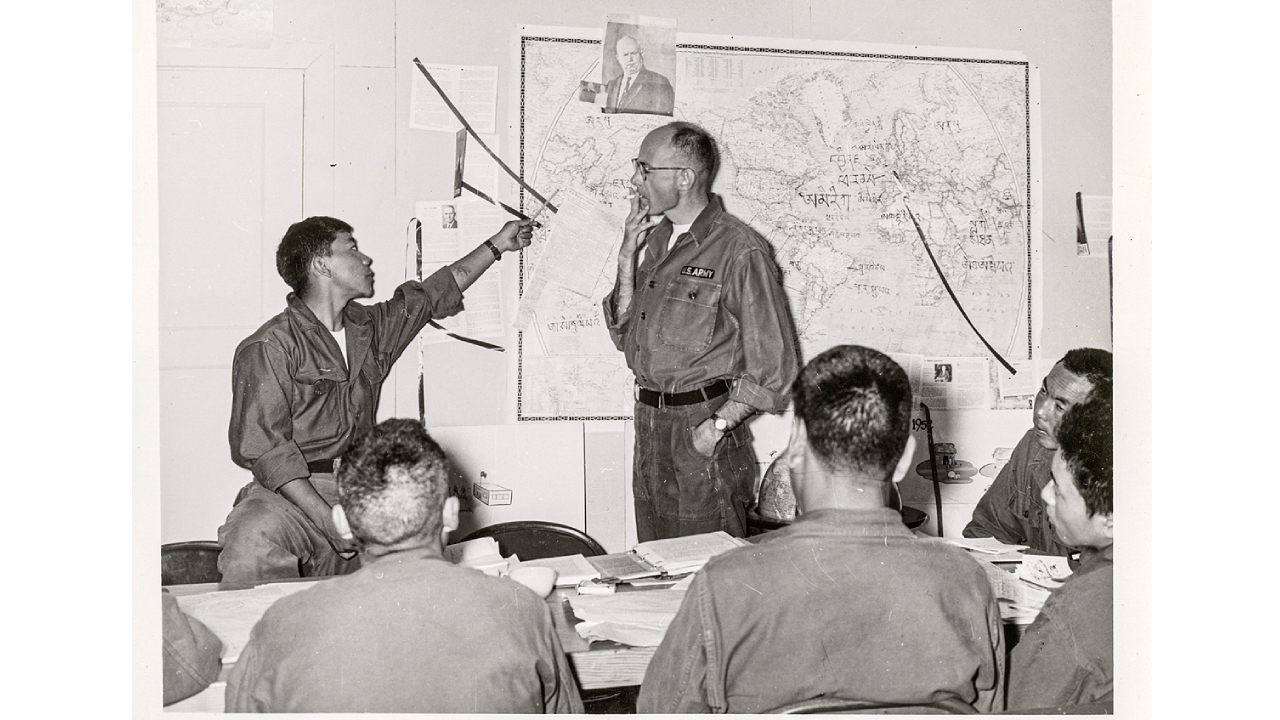
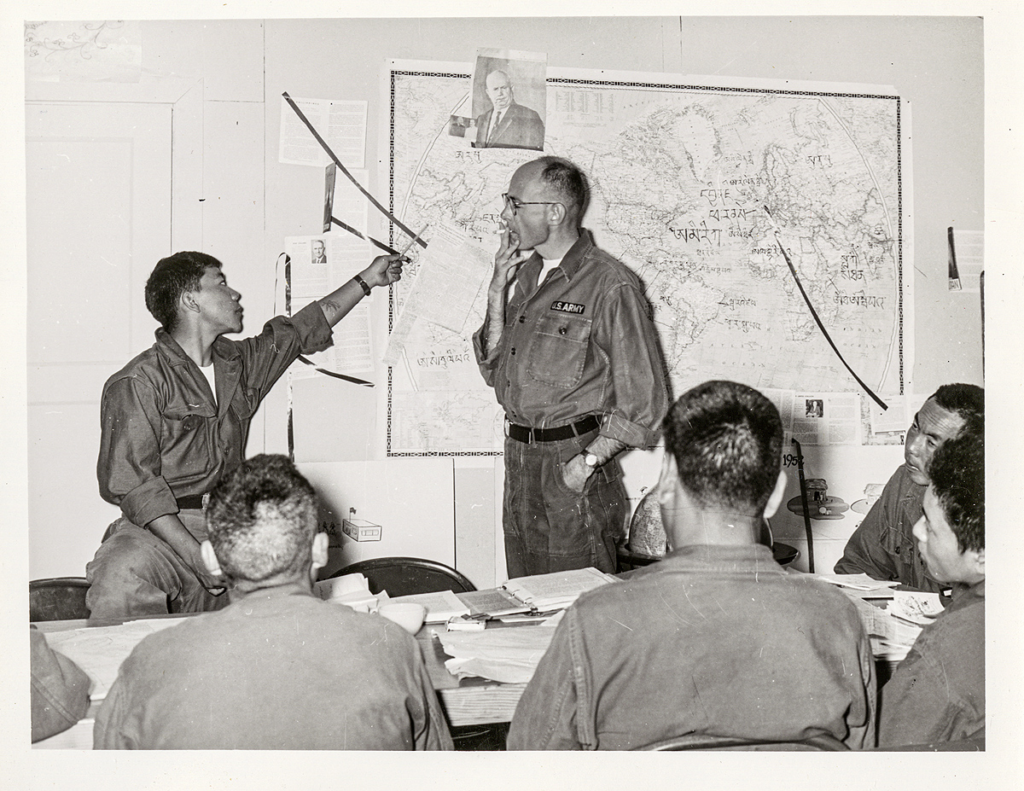
Training was intense and tailored to the Tibetans’ needs. CIA officer John Kenneth Knaus lectured on history, political theory and espionage. Practical training covered guerrilla warfare, sabotage, radio communications, cryptography, survival skills, hand-to-hand combat, firearms and improvised explosives.
The CIA recruited professional smoke jumpers from the National Forest Service, known as the “Missoula Mafia,” to serve as parachute dispatch officers. Among them, “Mr. Jack” personally cut and stripped trees to build the platforms used for jump practice. Everyone liked “Tony Poe,” who was always joking and rode around camp on horseback, according to Thinlay Paljor (Rocky).
Then there was “Mr. Tom.” “All the Tibetan trainees were very fond of him,” Paljor recalled. “When he was finally transferred, we had a sad farewell party. He couldn’t speak – he was crying; everybody was crying. He said he had to go but if we needed him, he would come and volunteer with us.”
One incident nearly exposed the operation, according to Bruce Walker, the last surviving CIA case officer involved in ST CIRCUS. “The Tibetan trainees found the equipment – including napalm and a wooden trough for making a missile – that went off one night. They lost control of it. It landed on a building at the Climax Molybdenum Mine near the Climax gate.” The CIA officer in charge rushed to the mine, met with the owner and paid $25,000 for damages.
Rumors of the explosion reached Washington, where CIA Director Robert McNamara reportedly quashed the story as a personal favor. Rather than shutting down the operation, the CIA turned the incident to its advantage, using it as a pretext for controlled detonations near Dumra, creating the illusion of a secret atomic test site hidden in the mountains near Leadville.
However, as Buddhist scripture teaches, “Three things cannot long stay hidden: the sun, the moon and the truth.”
Late one winter night, a transport vehicle carrying Tibetan trainees to Peterson Airfield in Colorado Springs for parachute testing slid off a mountain road during a snowstorm, delaying their usual pre-dawn arrival. By the time they reached the tarmac, airport staff were already preparing for the day. When a bus full of “oriental looking” men pulled up, suspicion arose. A call was made, and within minutes, soldiers stormed the terminal, forcing everyone into offices and hangars at gunpoint.
One civilian later recalled an army officer addressing them: “He lined us up in my office. We had to hold up our hands and swear we wouldn’t talk about it. He said we were under the highest secrecy in the world.”
Close to 300 Tibetan freedom fighters trained at Camp Hale. Nearly every trainee and CIA trainer interviewed has recalled the deep camaraderie and shared sense of mission.
Translator Tashi Chödhar remembered a poignant moment on the tarmac in Thailand between Yeshi Wangyal (Tim) – an intelligent and serious-minded son of a chief – and a CIA officer known as Mark, with whom he had grown close during training. As Wangyal prepared for his mission, Mark was in tears while Wangyal struggled to relay a final request: for Lhamo Tsering to take care of his wife and children in Darjeeling. Yeshi Wangyal never returned from Tibet – he died in the land of his ancestors.
To the deep disappointment of the Tibetans and many CIA trainers, the ST CIRCUS program was abruptly abandoned in 1972 as U.S.-China relations began to thaw. Many Colorado-trained guerrillas were arrested in Mustang, Nepal, at China’s behest. Those who survived remain refugees, while Tibet remains under occupation to this day.
In 2010, a bronze plaque was installed near Camp Hale. It reads:
“From 1958 to 1964, Camp Hale played a vital role as a training site for Tibetan freedom fighters. Trained by the CIA, many of these brave men lost their lives in the struggle for freedom.
“ ‘They were the best and the bravest of their generation, and we wept together when they were killed fighting alongside their countrymen.’ ” – Orphans of the Cold War, by John Kenneth Knau